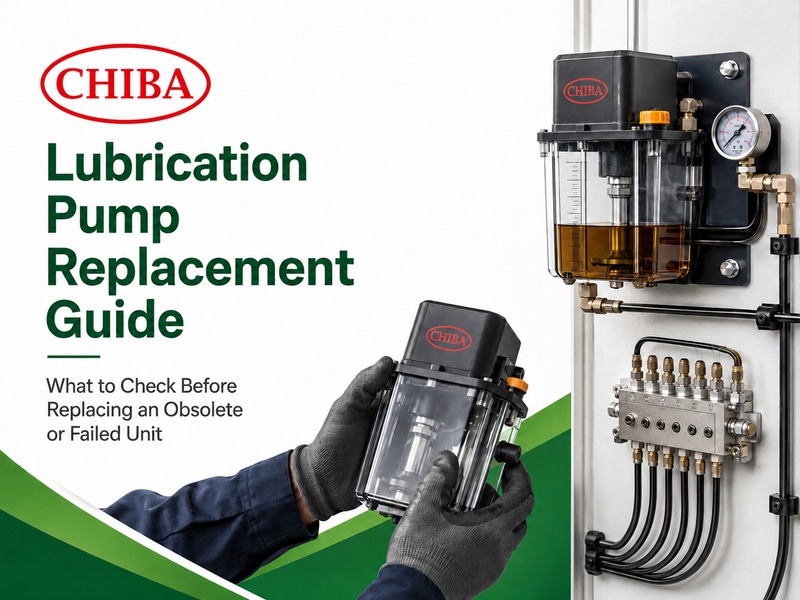
Lubrication Pump Replacement Guide: What to Check Before Replacing an Obsolete or Failed Unit
When a lubrication pump fails or its original model is discontinued, choosing a similar-looking replacement is not enough. The new pump must also be compatible with the lubricant, system design, operating pressure, distributors, piping, electrical controls, and available installation space.
An incompatible pump may appear to operate normally but fail to complete the required lubrication cycle. This can lead to insufficient lubricant delivery, leakage, repeated alarms, or distributors that cannot reset properly.
At YUNG TIEN LUBRICATION TECHNOLOGY CO., LTD., we recommend inspecting the complete automatic lubrication system before replacing a failed or obsolete lubrication pump. This guide explains the main items that maintenance engineers, machine builders, system integrators, and purchasing teams should confirm before selecting a replacement pump.
Table of Contents
- Confirm Whether the Lubrication Pump Is the Actual Cause of the Problem
- Confirm the Lubrication System Design, Lubricant, and Pressure-Relief Requirements
- Match Pump Output and Working Pressure to the Actual Lubrication Demand
- Verify Voltage, Timer, PLC, and Alarm Compatibility
- Check Installation Dimensions, Reservoir Capacity, Distributors, and Piping
- Test the Replacement Pump and Prepare the Required Selection Information
- Frequently Asked Questions About Lubrication Pump Replacement
1. Confirm Whether the Lubrication Pump Is the Actual Cause of the Problem
A lubrication problem does not always mean that the pump itself has failed. Before ordering a replacement, inspect the electrical controls, lubricant, filters, distributors, and piping.
The following conditions may be mistaken for lubrication pump failure:
- The reservoir is empty or contains insufficient lubricant
- Air is trapped inside the pump or main line
- The lubricant is contaminated
- The oil viscosity or grease grade is unsuitable
- A filter, fitting, or distributor is blocked
- Tubing is crushed, leaking, or disconnected
- Wiring is loose or the power supply is unstable
- The timer or PLC settings are incorrect
- The pressure switch is incorrectly adjusted
For example, the pump motor may run while no lubricant reaches the machine. The actual cause may be trapped air, a blocked suction passage, damaged tubing, unsuitable lubricant, or insufficient system pressure rather than complete pump failure.
Replacement should be considered when the pump can no longer build or maintain the required pressure, the motor repeatedly malfunctions, internal pumping components are severely worn, the housing or reservoir is damaged, or repair parts are no longer available.
If the original model has been discontinued, it may be practical to evaluate a replacement before the pump fails completely. This gives the maintenance team enough time to confirm the required specifications and reduce the risk of unexpected downtime.
Key Replacement Point:
Identify the actual cause of the lubrication problem before replacing the pump. A new pump cannot correct blocked piping, unsuitable lubricant, incorrect control settings, or a damaged distributor.
2. Confirm the Lubrication System Design, Lubricant, and Pressure-Relief Requirements
The replacement pump must be compatible with the operating principle of the existing centralized lubrication system.
Lubrication systems can be classified in several ways. When evaluating a replacement pump, separately confirm the system operating method, lubricant and delivery method, and whether the lubricant is consumed or recirculated.
System Operating Method
- Resistance-type lubrication system
- Pressure-relief lubrication system
- Progressive lubrication system
A resistance-type system generally distributes oil through proportioning components that create different levels of flow resistance. Related products can be found in our Auto Engine Oil Resistant Lubrication Systems.
A pressure-relief system builds line pressure while the pump operates and releases the pressure after the pump stops. Some volumetric distributors require this pressure drop before they can reset and prepare for the next lubrication cycle. Related products can be found in our Auto Engine Pressure-Relief Oil Lubrication Systems.
A progressive system delivers lubricant through a sequence of pistons inside the distributor. If one outlet or passage becomes blocked, the entire distributor may stop operating.
Lubricant and Delivery Method
- Oil
- Grease or fluid grease
- Air-operated lubrication
- Oil-air or oil mist lubrication
Confirm the lubricant type and its specified viscosity or grease grade. A pump designed for low-viscosity oil may not deliver thicker lubricant effectively through long or narrow piping.
Grease and fluid grease may also become more difficult to transport at lower temperatures. Air-operated, oil-air, and oil mist systems require different delivery and control components from conventional oil lubrication systems.
Lubricant Circulation
- Total-loss lubrication system
- Recirculating oil lubrication system
A total-loss system delivers lubricant to the lubrication points without returning it to the reservoir for reuse. A recirculating oil system returns used oil to the reservoir for filtration, cooling, or recirculation.
This difference affects pump flow, reservoir design, return piping, and filtration requirements.
Lubricant delivery may also be affected by:
- Ambient and operating temperatures
- Piping length and internal diameter
- Distributor design
- Machine speed and load
- Lubrication frequency
- System pressure
- Contamination inside the reservoir or piping
The lubricant should not be changed merely to suit a replacement pump. Any alternative lubricant must still be suitable for the machine’s seals, bearings, linear guides, ball screws, gears, chains, and other lubricated components.
Key Replacement Point:
Confirm the system operating method, lubricant, delivery method, and circulation design separately. Pumps used in different lubrication systems should not automatically be considered interchangeable.
3. Match Pump Output and Working Pressure to the Actual Lubrication Demand
The replacement pump should provide the required lubricant volume at the machine’s actual working pressure.
The required pump capacity depends on:
- The total number of lubrication points
- The required quantity at each lubrication point
- The lubrication cycle and delivery frequency
- The distributor type and output
- The length of the main and branch lines
- The internal diameter of the tubing
- The number of fittings and branches
- The distance between the pump and the farthest lubrication point
- The lubricant viscosity at the actual operating temperature
If the pump output is insufficient, the pump may need to run longer to complete one lubrication cycle. Lubrication points near the pump may receive lubricant while more distant points remain inadequately supplied.
However, selecting a pump with much greater output is not always better. If the pump output or operating time exceeds the system demand, it may cause excessive lubricant delivery, leakage, lubricant waste, or over-lubrication.
System pressure is affected by lubricant viscosity, piping resistance, distributors, fittings, and possible blockages. A higher maximum pump pressure does not necessarily provide better lubrication performance. All connected components must remain within their rated pressure limits.
The machine’s current configuration should also be reviewed. If additional lubrication points, longer piping, different distributors, or another lubricant have been introduced, the original pump specification may no longer meet the present system requirements.
Lubrication Pump Replacement Specification Checklist
Pump Output
Confirm: The volume delivered per minute or per lubrication cycle.
Why It Matters: It determines whether enough lubricant is available for the complete system.
Normal Working Pressure
Confirm: The pressure required during normal machine operation.
Why It Matters: The pump must overcome the resistance created by the piping and distributors.
Maximum Allowable Pressure
Confirm: The rated pressure of the pump and all connected components.
Why It Matters: Excessive pressure may place unnecessary stress on tubing, fittings, seals, and distributors.
Number of Lubrication Points
Confirm: The total number of lubrication outlets connected to the system.
Why It Matters: A higher number of lubrication points generally increases the total lubricant demand.
Lubrication Cycle
Confirm: The pump operating time and the interval between lubrication cycles.
Why It Matters: Correct settings help prevent insufficient lubrication or excessive lubricant delivery.
Longest Piping Distance
Confirm: The distance between the pump and the farthest lubrication point.
Why It Matters: Longer piping may increase pressure loss and lubricant delivery time.
Distributor Output
Confirm: The amount of lubricant delivered from each outlet.
Why It Matters: Each outlet should provide the quantity required by the corresponding machine component.
Lubricant Viscosity
Confirm: The lubricant’s flow characteristics at the actual operating temperature.
Why It Matters: Viscosity affects system pressure, flow resistance, and lubricant delivery performance.
Key Replacement Point:
Do not select a replacement pump based only on maximum pressure. The pump must provide the required lubricant volume under the actual operating conditions of the complete industrial lubrication system.
4. Verify Voltage, Timer, PLC, and Alarm Compatibility
The replacement pump must match the machine’s power supply and control method.
First, confirm the voltage and frequency of the original pump. Depending on the machine design and destination market, an automatic lubrication pump may use AC 110V, AC 220V, DC power, or another specified voltage.
Use the original pump nameplate, machine wiring diagram, electrical drawing, or measured control voltage as the reference. Do not determine the electrical specification from the pump’s appearance.
The pump control method should also be confirmed:
- Built-in timer
- External timer
- PLC command control
- Manual lubrication button
- Machine-cycle signal
- Continuous operation
- Pressure-switch feedback or pressure-monitored control
For PLC-controlled machines, confirm the required input and output signals. Depending on the selected pump model and system configuration, monitored conditions may include a low lubricant level, insufficient pressure, motor malfunction, an incomplete lubrication cycle, or a general lubrication alarm.
MFE Series Oil Lubrication Pump
YUNG TIEN’s product range includes the officially named MFE Engine Oil Resistant Lubrication (Resistant Lubricator) Pump with LCD Display. Available configurations include 110V and 220V models, PLC-controlled versions, and internally timed models. Published features include adjustable pressure output, oil-level detection, an instant lubrication button, and oil-pressure detection.
View the MFE Engine Oil Resistant Lubrication Pump with LCD Display
When the relevant detection functions are correctly configured, the system can alert operators to possible conditions such as insufficient pressure, a damaged oil tube, a blocked oil passage, poor motor operation, or a low oil level. These signals support system inspection but cannot independently identify the exact location of a fault.
Key Replacement Point:
Before ordering a replacement pump, confirm the voltage, frequency, timer range, control method, alarm logic, connector type, and PLC signal requirements.
5. Check Installation Dimensions, Reservoir Capacity, Distributors, and Piping
A pump that meets the technical requirements must also fit within the available space and connect correctly to the existing lubrication components.
Before removing the original pump, record the following information:
- Overall pump dimensions
- Mounting-hole positions
- Installation direction
- Available space inside the machine
- Reservoir capacity
- Space required for lubricant refilling
- Outlet position and thread size
- Tubing diameter
- Electrical cable direction
- Required service and removal clearance
Reservoir capacity affects both the available installation space and lubricant refill frequency. A larger reservoir may reduce refill frequency but may not fit within the original machine enclosure. A smaller reservoir may be easier to install but require more frequent inspection and refilling.
The outlet position and thread size should also be checked carefully. Although adapters may be used to connect components with different specifications, too many adapters increase installation complexity and create additional potential leakage points.
Also inspect the compatibility and condition of the following existing components:
- Proportioning units
- Volumetric distributors
- Progressive distributors
- Main and branch piping
- Pressure switches
- Level switches
- Filters
- Fittings and connectors
- Individual lubrication points
Hardened lubricant, contaminated oil, crushed tubing, loose fittings, or blocked branch lines can restrict lubricant delivery. These problems should be corrected before the new pump is commissioned.
If the machine has been modified since the original pump was installed, select the replacement according to the current system configuration rather than relying only on the old pump model.
Key Replacement Point:
Confirm both physical installation and system compatibility, including dimensions, reservoir capacity, outlets, distributors, piping, and monitoring components.
6. Test the Replacement Pump and Prepare the Required Selection Information
After the replacement pump has been installed, it should be tested before the machine returns to full production.
Fill the reservoir with the approved lubricant, prime the pump, and remove trapped air from the piping according to the system configuration. Then run a manual or test lubrication cycle.
During testing, confirm that:
- The pump starts and stops correctly.
- The system reaches the expected working pressure.
- Line pressure is released correctly where pressure relief is required.
- Each distributor completes its operating cycle.
- Lubricant reaches every connected lubrication point.
- The farthest lubrication point receives sufficient lubricant.
- No leakage appears around the pump, tubing, or fittings.
- Equipped alarm functions operate correctly.
- PLC input and output signals meet the original control requirements.
- The final operating time and lubrication interval settings are recorded.
After the machine has returned to production for a period of time, inspect the system again. Check for abnormal pressure readings, leakage, excessive lubricant accumulation, unusual noise, rising component temperature, or repeated alarms.
What Information Should Be Provided When Requesting a Replacement Pump?
- Original pump manufacturer and model
- A clear photograph of the nameplate
- Voltage and frequency
- Pump output or discharge volume
- Normal working pressure and maximum pressure
- Reservoir capacity
- Lubricant type, viscosity, or grease grade
- Existing lubrication system type
- Distributor type and model
- Number of lubrication points
- Tubing diameter
- Longest piping distance
- Pump mounting dimensions
- Outlet thread size and position
- Timer or PLC control requirements
- Required alarm signals
- Description of the original pump problem
YUNG TIEN supplies resistance-type oil lubrication pumps, pressure-relief oil lubrication pumps, resistance-type grease pumps, pressure-relief grease pumps, air-operated lubricators, oil mist systems, recirculating system pumps, and related distributors, accessories, and tubing.
Because a failed or discontinued pump may not have an identical one-to-one replacement, final suitability must be evaluated according to the application, lubricant, connected components, control requirements, and operating conditions.
Key Replacement Point:
Providing complete pump and system information helps us evaluate a more suitable solution and reduces the risk of selecting an incompatible replacement.
7. Frequently Asked Questions About Lubrication Pump Replacement
Q1. Can a pressure-relief oil lubrication pump be directly replaced with a resistance-type oil lubrication pump?
Answer:
Not necessarily. A pressure-relief system may need the line pressure to fall between lubrication cycles so that compatible volumetric distributors can reset.
Before replacement, confirm the pump type, distributor design, normal working pressure, and reset requirements. Do not make the decision based only on appearance, voltage, or mounting dimensions.
Q2. Can I select a pump with a higher pressure rating than the original pump?
Answer:
A higher maximum pressure does not necessarily make the pump more suitable.
The replacement pump should provide the required output at the normal working pressure while ensuring that the tubing, fittings, seals, and distributors remain within their rated pressure limits.
Q3. Does the replacement pump need to have the same reservoir capacity as the original model?
Answer:
Not necessarily. The reservoir should hold enough lubricant for the planned maintenance interval and fit within the available installation space.
A smaller reservoir may require more frequent refilling, while a larger reservoir may interfere with the machine enclosure, piping position, or service space.
Q4. Why is the replacement pump running while no lubricant reaches the machine?
Answer:
Possible causes include trapped air, insufficient lubricant in the reservoir, unsuitable viscosity, a blocked filter or distributor, damaged tubing, insufficient working pressure, incompatible components, or incorrect control settings.
For a pressure-relief system, also confirm that the line pressure is released correctly so the distributors can reset. The inspection should cover the complete lubrication circuit rather than only checking whether the pump motor is running.
Replace the Lubrication Pump Without Compromising System Performance
A suitable replacement pump must work with the complete lubrication system rather than only match the original pump’s appearance, voltage, or reservoir capacity.
A properly evaluated replacement can restore reliable lubricant delivery while reducing the risk of leakage, repeated alarms, insufficient lubrication, and unplanned downtime.
Related Articles
Resistance vs. Pressure-Relief: Selecting the Right Quantitative Lubrication Pump for Your System
Understand the main differences between resistance-type and pressure-relief lubrication systems, including operating principles, lubricant distribution, and suitable applications.
Common Lubrication Problems in Automated Production Lines
Learn how pressure-relief electric grease pumps can improve lubricant control, reduce waste, and support more stable system operation.
What Is an FS Disposable Grease Pouch?
Learn how an FS disposable grease pouch can help reduce contamination, simplify lubricant replacement, and minimize grease waste.
Need Help Replacing a Failed or Obsolete Lubrication Pump?
Please provide the original pump model, nameplate photo, voltage, pressure, lubricant, distributor information, installation dimensions, and control requirements. We will review the application and existing system information to help evaluate a suitable lubrication solution.