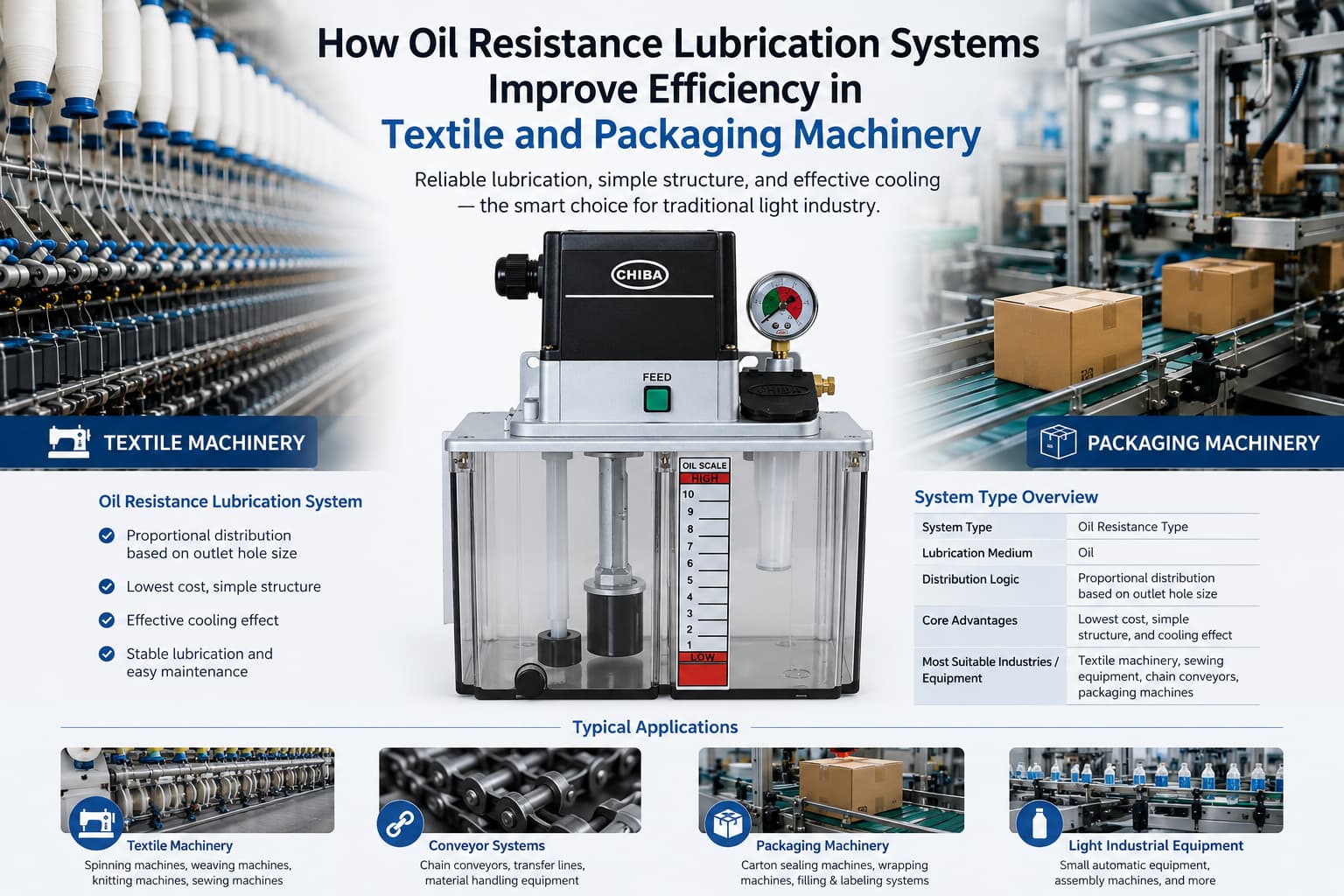
How Oil Resistance Lubrication Systems Improve Efficiency in Textile and Packaging Machinery
Introduction: Why Lubrication Matters in Light Industrial Machinery
In industries such as textile manufacturing, sewing equipment, packaging systems, and conveyor applications, machinery often operates continuously for long hours at high speeds. Under these conditions, stable lubrication is essential not only for reducing friction, but also for maintaining production efficiency, minimizing downtime, and extending equipment lifespan.
Among various lubrication methods, the oil resistance lubrication system remains one of the most widely used solutions in traditional light industrial machinery. Thanks to its simple structure, low operating cost, and effective cooling capability, this system continues to play an important role in many factories worldwide.
At YUNG TIEN MACHINERY INDUSTRY CO., LTD., we specialize in lubrication pump systems designed to improve machine reliability and simplify industrial maintenance. In this article, we explore how oil resistance lubrication systems work and why they remain highly effective for textile and packaging machinery.
What Is an Oil Resistance Lubrication System?
An oil resistance lubrication system is a type of centralized lubrication system that uses lubricating oil as the lubrication medium. The system distributes oil proportionally through metering components based on the size of each outlet hole, ensuring that every lubrication point receives the appropriate amount of oil.
Compared to grease lubrication systems, oil-based systems are often preferred in light industrial equipment because of their smoother flow characteristics and cooling effects.
Basic Working Principle
- The lubrication pump delivers oil into the distribution system.
- Oil flows through resistance-type distributors.
- Different outlet sizes control the oil distribution volume.
- Lubrication points receive continuous or intermittent oil supply.
This design allows the system to maintain stable lubrication while keeping the overall structure simple and cost-efficient.
Key Advantages of Oil Resistance Lubrication Systems
1. Low System Cost
One of the biggest advantages of oil resistance lubrication systems is their affordability. The structure is relatively simple, requiring fewer complex components compared to progressive or electronic lubrication systems.
This makes the system especially suitable for:
- Traditional textile factories
- Small to medium-sized production lines
- Packaging equipment manufacturers
- Conveyor system applications
For many manufacturers, it provides an excellent balance between lubrication performance and investment cost.
2. Simple Structure and Easy Maintenance
Because the system relies on proportional oil distribution through resistance control, installation and maintenance are relatively straightforward.
Benefits include:
- Easier piping layout
- Lower maintenance requirements
- Reduced troubleshooting complexity
- Faster servicing and replacement
For factories operating large numbers of machines, simplified maintenance can significantly reduce downtime and labor costs.
3. Cooling Effect for High-Speed Machinery
Unlike grease-based lubrication, oil lubrication provides additional cooling benefits during machine operation.
In textile and packaging machinery where components move continuously at high speed, excessive heat can cause:
- Increased wear
- Reduced lubrication effectiveness
- Shortened bearing life
- Machine instability
Oil lubrication helps dissipate heat more effectively, improving machine stability and long-term performance.
4. Stable Lubrication Distribution
The resistance-type distribution method controls oil flow according to outlet hole size, allowing each lubrication point to receive a proportional amount of oil.
This is particularly useful for machinery with:
- Multiple lubrication points
- Different component sizes
- Various friction loads
Consistent lubrication helps reduce uneven wear and improves overall equipment reliability.
Typical Applications in Textile Machinery
Textile equipment often operates under continuous production conditions with numerous moving parts requiring constant lubrication.
Common applications include:
- Spinning machines
- Weaving machines
- Knitting equipment
- Sewing machines
- Yarn processing systems
Oil resistance lubrication systems help maintain smooth operation while reducing maintenance interruptions. In sewing and textile environments, the cooling effect of oil lubrication is especially beneficial for high-speed moving components.
Applications in Packaging Machinery
Packaging machinery relies heavily on synchronized movement and continuous operation. Insufficient lubrication can quickly lead to production stoppages or inconsistent packaging quality.
Typical packaging applications include:
- Carton sealing machines
- Filling and labeling systems
- Conveyor belts
- Wrapping machines
- Automatic packaging lines
Oil resistance lubrication systems provide stable lubrication while keeping maintenance requirements relatively low, making them ideal for packaging environments where uptime is critical.
Oil Resistance Lubrication System Overview
| System Type | Lubrication Medium | Distribution Logic | Core Advantages | Most Suitable Industries / Equipment |
|---|---|---|---|---|
| Oil Resistance Type | Oil | Proportional distribution based on outlet hole size | Lowest cost, simple structure, and cooling effect | Traditional light industry: textile machinery, sewing equipment, simple chain conveyors, and packaging machines |
Why Many Traditional Industries Still Use Oil Resistance Systems
Although modern lubrication technologies continue to evolve, oil resistance lubrication systems remain widely used because they offer several practical advantages:
- Lower installation cost
- Reliable oil distribution
- Easy maintenance
- Effective cooling performance
- Suitable for continuous light industrial operation
For many traditional industries, these advantages are more valuable than adopting overly complex lubrication systems.
Choosing the Right Lubrication Partner
Selecting the right lubrication system is not only about lubrication performance; it also affects maintenance efficiency, machine lifespan, and long-term operating costs.
At YUNG TIEN MACHINERY INDUSTRY CO., LTD., we provide professional lubrication pump solutions designed for a wide range of industrial applications. Our experience in lubrication systems allows us to help manufacturers select the most suitable configuration based on machine type, operating conditions, and lubrication requirements.
Conclusion
Oil resistance lubrication systems continue to be an effective and economical solution for textile and packaging machinery. Their simple structure, stable oil distribution, and cooling capability make them highly suitable for traditional light industrial equipment operating under continuous production conditions.
For manufacturers seeking reliable lubrication with lower maintenance complexity and operating costs, oil resistance lubrication systems remain a practical and proven choice.
If you are looking to improve lubrication efficiency in your machinery, YUNG TIEN MACHINERY INDUSTRY CO., LTD. is ready to support your lubrication system needs with professional solutions and technical expertise.